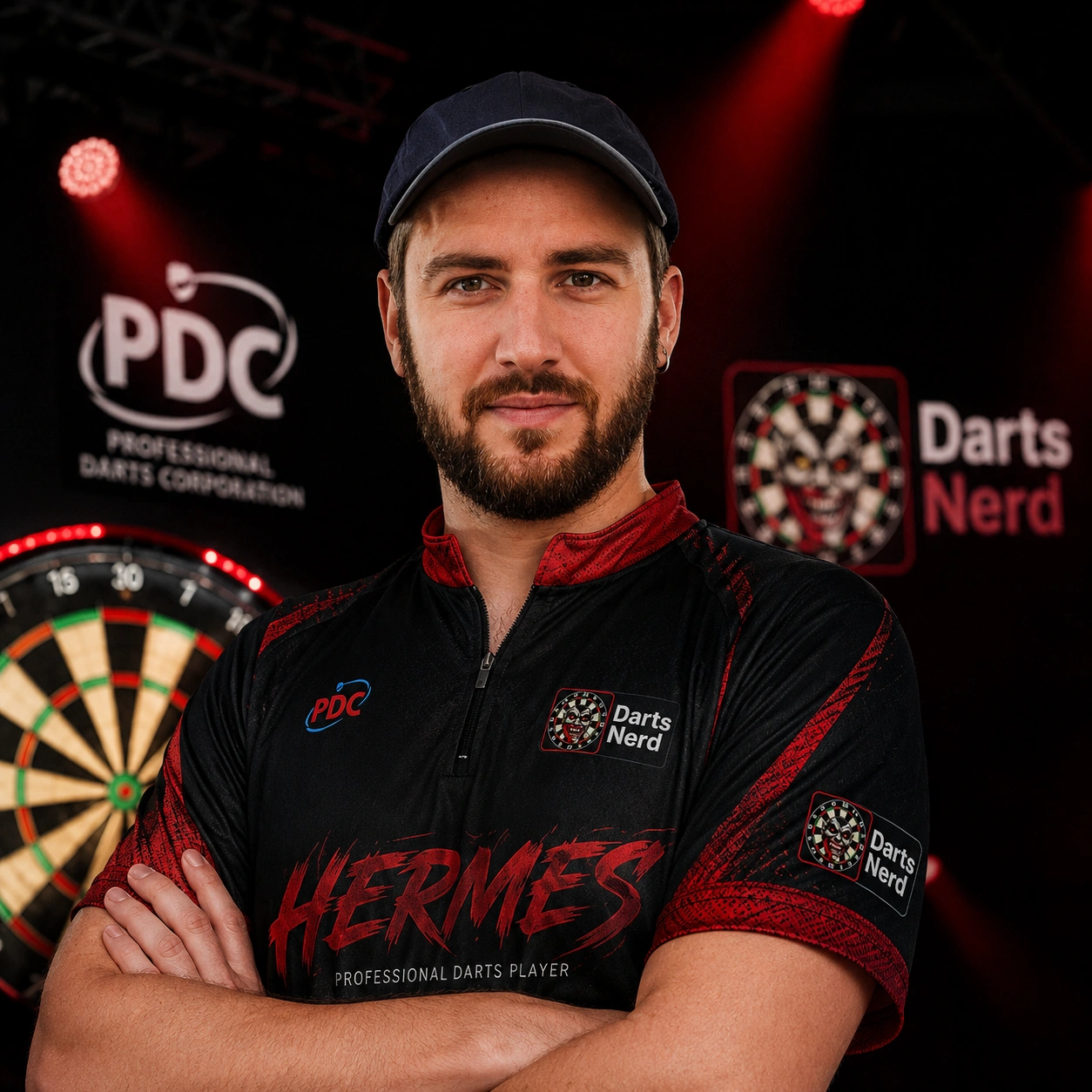
Vincent van der Voort highlights an issue that is cropping up more and more frequently on the PDC European Tour: the big names are becoming more selective about their appearances, and organisers are sometimes left having to sell events without their headline acts. The former player specifically mentions Luke Littler, as well as Luke Humphries, Gerwyn Price, Nathan Aspinall and Gary Anderson.
This issue is now significant because the season is progressing with a packed schedule, higher prize money and high public expectations. Put another way: when the stars miss several European events, it is no longer just a matter of individual rest; it is also a question of entertainment value and ticket sales.
Van der Voort raises concerns about withdrawals from the European Tour
In the ‘Darts Draait Door’ podcast, relayed by DartsNews, Van der Voort begins by praising Littler and Wessel Nijman’s first half of the season. In his view, Littler remains the player who has dominated the narrative this year, even with a less packed schedule than others.
This is precisely where his analysis becomes interesting. Van der Voort does not criticise the players for managing their energy, but he sees a limitation for the European Tour. The Players Championships are played behind closed doors, so the absence of a star has less of a visual impact there. On the European Tour, the logic is different: the venues are full, tickets are sold on the strength of the line-up, and the public often come to see the best players in the flesh.
The Littler case: a symbol of a more selective calendar
The most widely quoted passage concerns Littler and Germany, where many European Tour events are held. Van der Voort states that the world number one has already hinted that he does not like the country, then adds that this is becoming a problem because a large part of the European Tour takes place there. The wording is blunt, but above all it highlights a very real sporting tension: the tour needs its stars at the venues where it builds its profile.
The issue is not limited to Littler. Van der Voort also cites Humphries, who reportedly decided to skip several European Tour events when he was feeling unwell during the Premier League, as well as Price and Aspinall, who he says are regularly absent. Anderson, for his part, is in a category of his own: his reduced schedule has been in place for years, whilst still allowing him to maintain a long-term place in the world’s top 16.
| Player quoted | Van der Voort’s analysis |
|---|---|
| Luke Littler | Highly successful, but rarely seen at several European events, particularly in Germany. |
| Luke Humphries | A more cautious approach to his schedule during a physically challenging period. |
| Gerwyn Price | Often entered, but not always there when it comes time to play, according to Van der Voort. |
| Nathan Aspinall | A popular figure whose absences detract from the appeal of the evenings. |
| Gary Anderson | A reduced schedule he has long accepted, with enduring sporting success. |
Why the issue goes beyond player workload
The issue isn’t about asking the best players to compete in everything. The PDC season is gruelling, with the Premier League, ProTour, majors, World Series and European Tour all taking place. Players have choices to make, especially when managing their physical and mental well-being becomes essential to their performance.
But for European organisers, the calculation is tougher. A tournament that loses several headline names doesn’t just lose average scores on the board; it also loses some of its appeal. This is where the issue ties in with a trend already evident this season: the European Tour needs new compelling stories, such as Beau Greaves’ historic debut, but it cannot do without its biggest names in the long term.
Barry Hearn also puts pressure back on the headline names
Van der Voort’s comments are no longer isolated. In an article published on 19 August, DartsNews relayed fresh comments from Barry Hearn on the same issue: the PDC can accept players managing their schedules, but it does not want the credibility of an event damaged by repeated or poorly explained withdrawals.
Hearn’s point is aimed at the structure of the system. Invited seeded players still receive money if they lose their opening match, but that money does not count towards the rankings. In his view, that privilege also comes with a level of responsibility. His blunt message was simple: if a player is a top professional, he also has to organise his diary like one.
The other key issue is money. Hearn believes part of the answer will involve increasing prize funds, because players naturally look first at what a trip can earn them. But he also warned that selective schedules can carry a sporting cost: play less, and players risk sliding down the rankings and making qualification for the World Matchplay, the World Grand Prix or the Grand Slam of Darts harder.
A warning sign, not yet a crisis
For now, we must keep things in perspective. The European Tour remains a solid product, with lively venues, straightforward weekend schedules and genuine sporting value in terms of qualifying for the European Championship. But Van der Voort points to a faint warning sign to watch out for: if absences are too often concentrated on the same events, the public might eventually start looking at the calendar more cautiously before buying tickets.
The end of the season will reveal whether this concern remains merely a topic for podcast discussions or whether it becomes a broader issue for the PDC. If the race for the top spots remains tight, some players will have less incentive to skip the later events. If the rankings are already set in stone, organisers may have to contend with a less predictable field. On this sort of circuit, that can quickly change the complexion of a weekend.
Main sources: DartsNews on Vincent van der Voort, based on the Darts Draait Door podcast, and DartsNews on Barry Hearn’s comments.