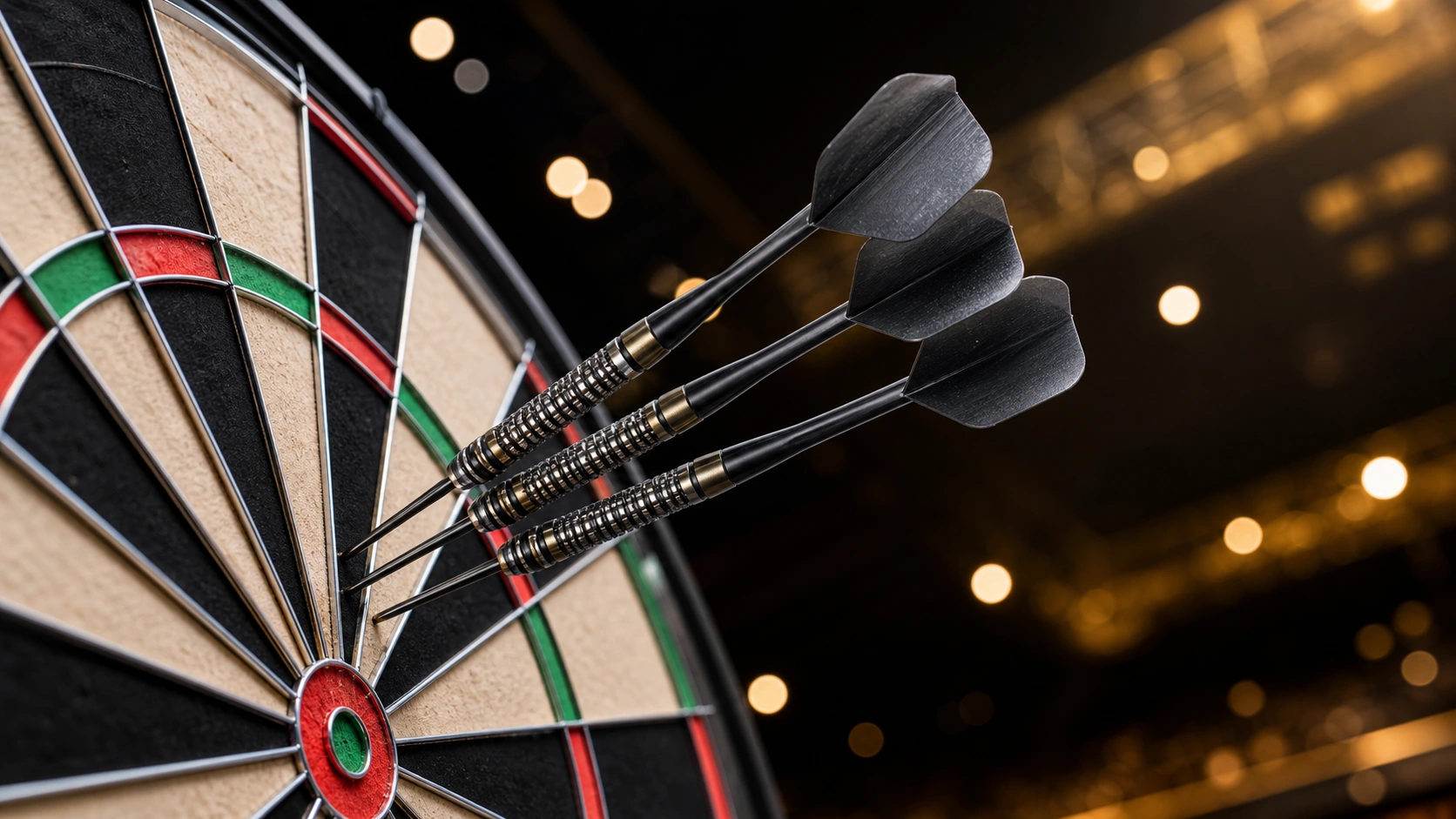
Luke Littler is coming off a historic 2026 World Matchplay, and Sky Sports has published fresh detail from Target Darts on several technical choices behind his darts, grip and shaft-and-flight system.
The subject is more than just a bit of backroom curiosity. Following his title win in Blackpool, with a reported tournament average of 111.04 and a masterful final against Gerwyn Price, Littler is no longer just the winning phenomenon. He has also become the player whose every detail is scrutinised, right down to the length of his points and the way his darts land in the treble 20.
Target emphasises Littler’s talent first and foremost
Target is not presenting a magic formula. James Tattersall, the brand’s CEO, explains to Sky Sports that Littler’s talent is primarily his own. The equipment serves rather to put him at ease, to reduce minor technical friction and to gain the few percentage points that matter when a player groups his darts so tightly.
The equipment does not make the champion, but it can help preserve what his throw already produces. That distinction matters, because it avoids reducing Littler to his setup. At 19, the world number one is defined first by his speed of execution, repeatability and natural scoring power.
But at the very highest level, these details matter. When a player averages around 110 over an entire major tournament, the slightest bounce, the slightest deflection and the slightest misjudgement of the entry angle can cost a leg. This is where the discussion becomes interesting for fans and amateur players alike.
Grip, long points and the K-Flex system: the details mentioned
According to Tattersall, some of the inspiration for Littler’s darts came from Adrian Lewis’s model and the pixel grip, a grip unique to Target. This foundation reportedly informed the design of his first barrels, before several adjustments were made at the request of Littler and the technical team. The design is not fixed; it evolves in line with the player’s feel for the dart.
Target highlights three elements in particular: the shape of the barrel, the length of the points and the switch to the K-Flex system ahead of his first World Championship. The K-Flex system combines the shaft and the flight into a single piece. The idea is simple: to minimise deflection when a dart lands very close to another that is already embedded in the target.
On paper, it may seem minor. In a match, it changes the game. A player like Littler often throws his darts into extremely compact areas. Reducing a deviation, however slight, can keep a dart in the treble instead of letting it slip into the single. The score isn’t always decided by this, but consistency is also built on these small margins.
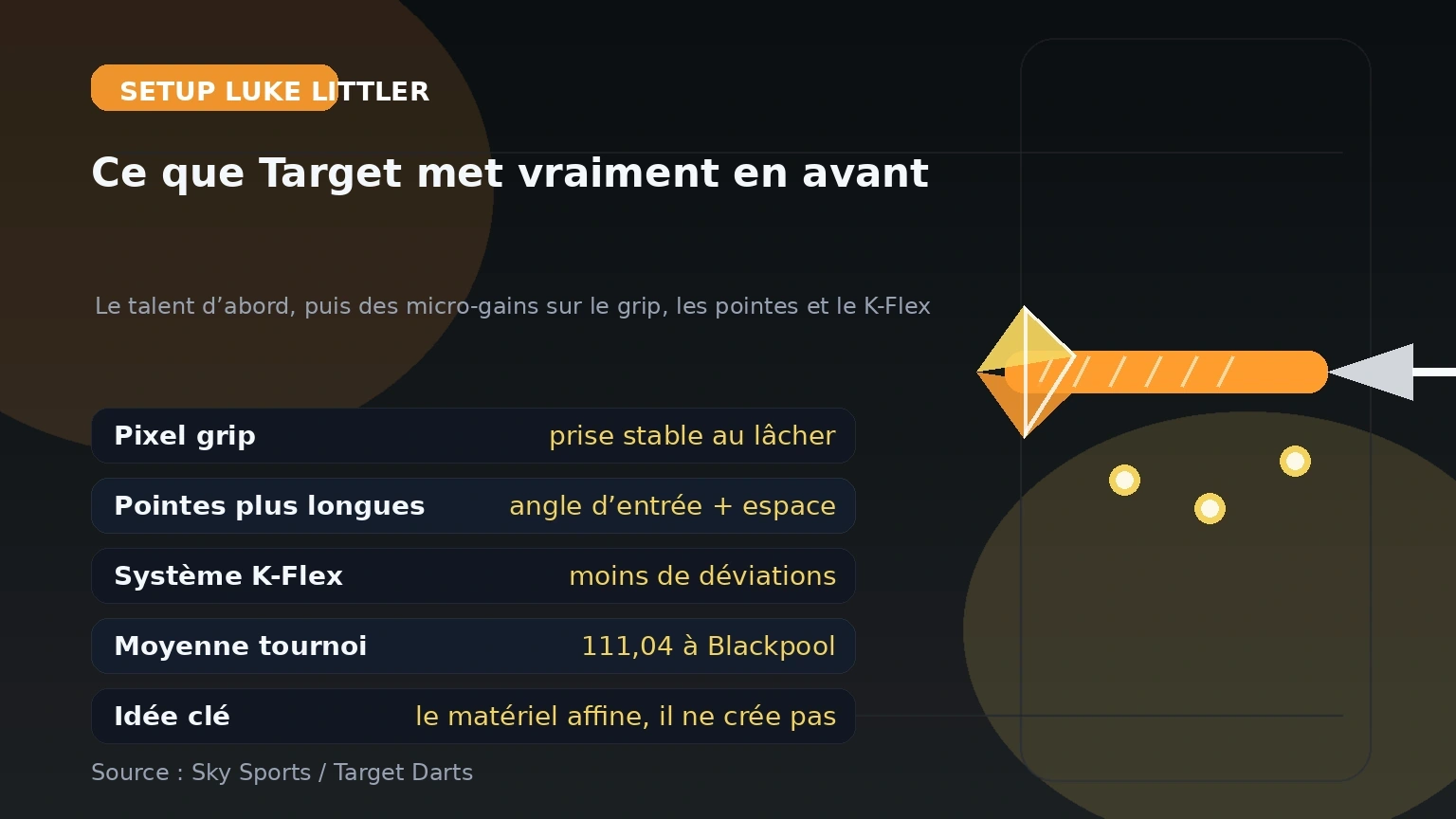
Infographic: the three equipment details highlighted around Luke Littler’s setup.
| Featured element | Role in the game |
| Pixel grip | Grip reference points and stability on release |
| Longer points | Entry angle and space around the barrel within the target |
| K-Flex | Reduced deviation between grouped darts |
| Successive adjustments | Adapting the setup to Littler’s feel |
Why this topic is timely
This update comes just after Blackpool. Littler has retained the World Matchplay title, while Target Darts remains at the centre of the equipment news cycle, amid growth, international ambitions and rumours around its financial future.
The story therefore goes beyond Littler alone. His results give the brand huge sporting exposure, while Target continues to frame its message around innovation, access to the game and market growth. The Sporting News has echoed that broader line as well.
This sequence also shows that equipment is now being treated as a performance topic in its own right. Around Littler, it is no longer just a fan purchase story, but a discussion about technical adjustment, product development and competitive gain.
What amateur players can take away from this
There’s also a very practical lesson for casual players. Copying Littler’s setup won’t turn anyone into a world champion. However, his example serves as a useful reminder: a dart must suit the player’s throwing style, not just that of their favourite player.
The grip, weight, point length and shaft-flight combination should help you reproduce the same throw consistently. If a change makes the grip feel more natural, reduces ricochets or gives a better angle on the board, it may be worthwhile. If it serves only to imitate a star, it is likely to confuse your feel for the game.
Littler remains a special case. But his example captures the current era of darts well: a sport that is more high-profile, more technical and more commercial, where performance also depends on the precision of the setup. The darts boom is no longer visible only in packed venues; it can also be seen in the growing attention paid to equipment and product design.
Sources used: Sky Sports and The Sporting News.