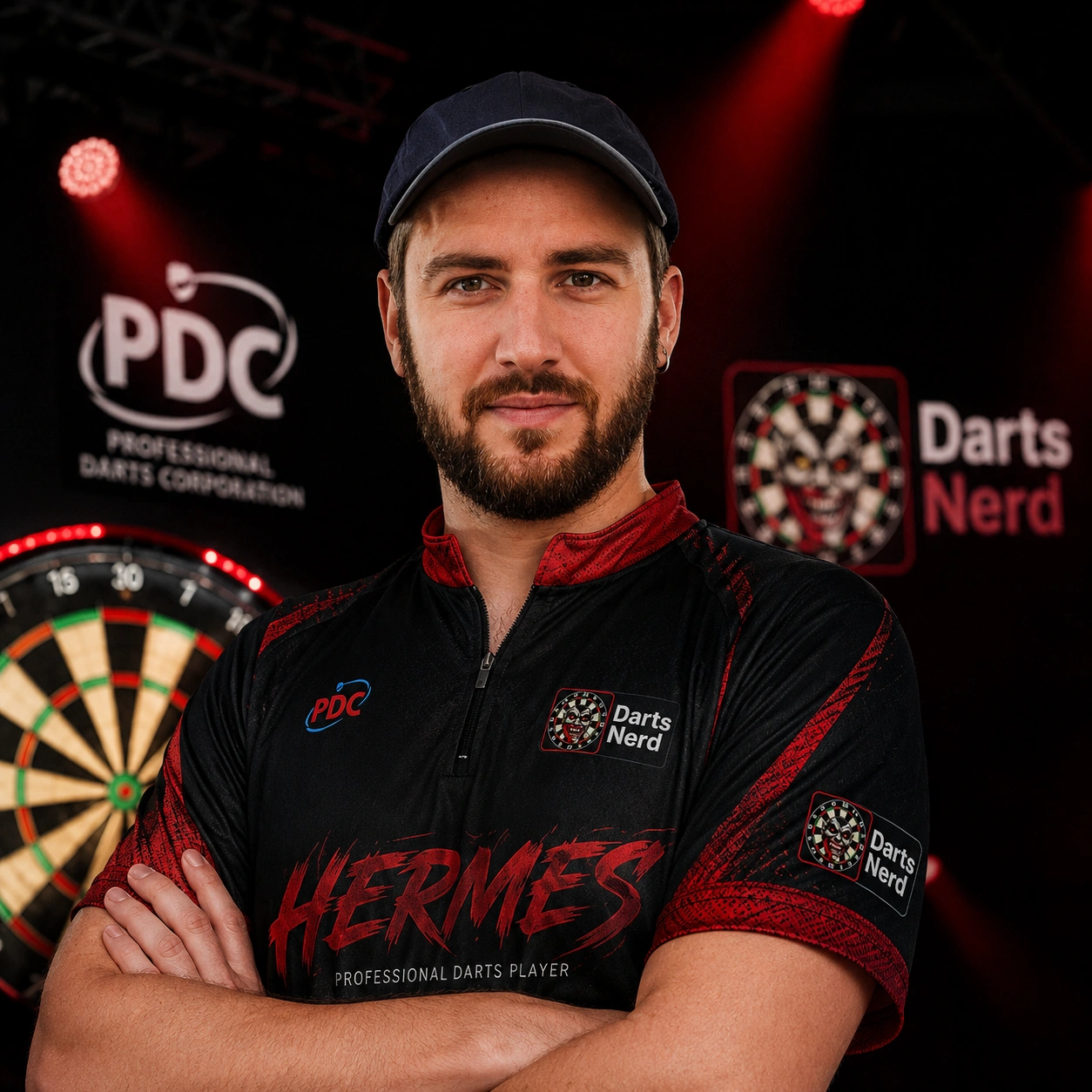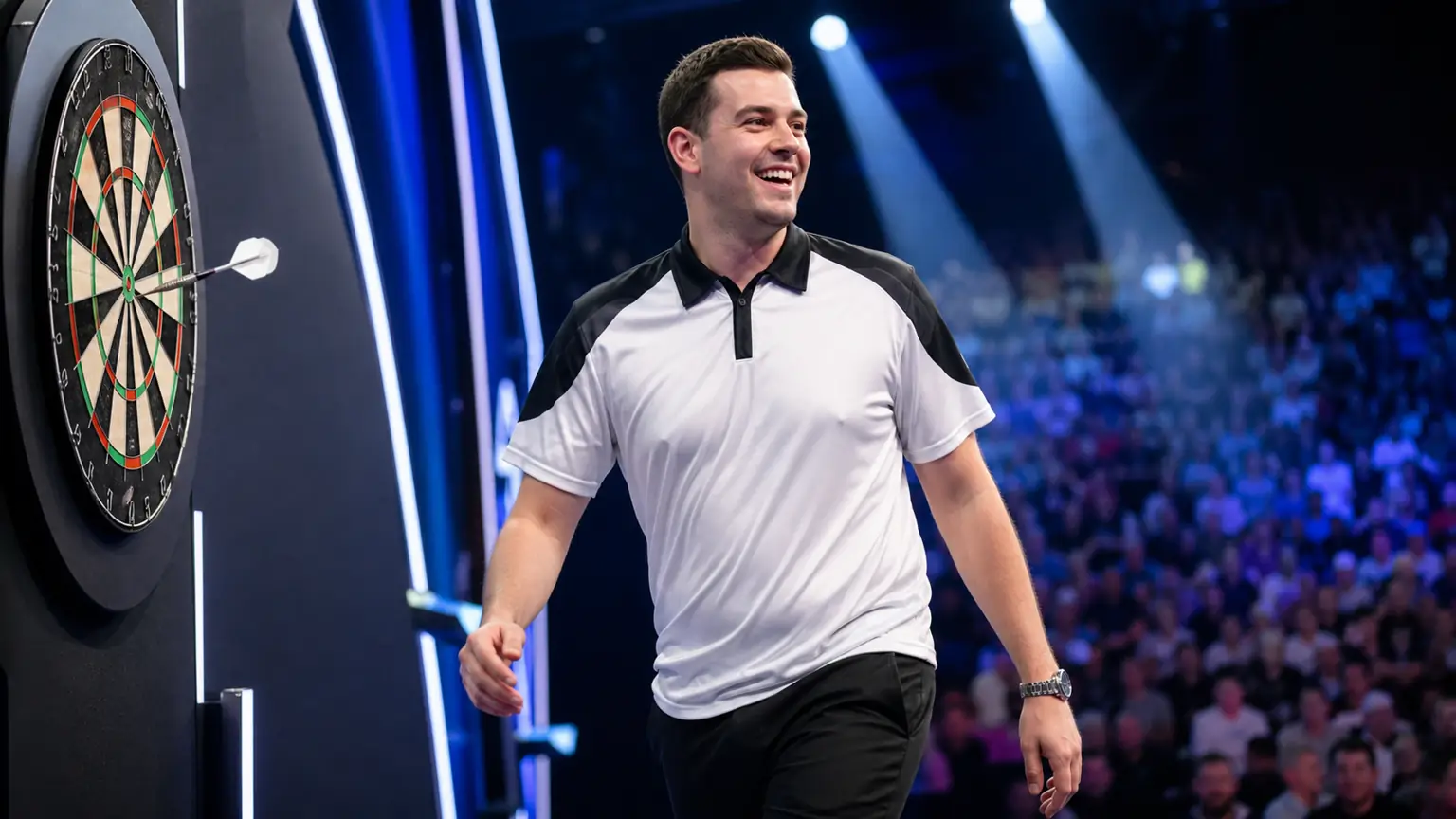
Justin Hood may have to change his nickname for a second time. The English player, who caught plenty of attention at the World Championship with his penguin hat walk-on and very natural stage presence, has explained that he had to give up Happy Feet. And the story does not end there: the emergency replacement, Pocket Rocket, is already creating another issue because of a meaning seen as distinctly risqué in the United States.
On the surface, it is a light social hook. But it also says something quite current about darts. The moment a player breaks through and becomes recognisable beyond the results sheet, his image no longer works in quite the same way. Rights issues, merchandise, social media and pop-culture references can all collide, and a simple nickname can suddenly become a genuine branding problem.
From Happy Feet to Pocket Rocket
Speaking to Oche180 in comments relayed by DartsNews, Hood said the change was not really his call. After his widely noticed appearance at the World Championship, Warner Bros. is said to have flagged the use of Happy Feet to manufacturer Target, because of the obvious link to the animated film of the same name.
For Hood, that meant more than a symbolic adjustment. It also required a quick reaction, because anything tied to a player’s identity ends up on merchandise, promotional visuals and event material sooner or later. Put simply, once a nickname starts to travel, it stops being a throwaway joke and becomes part of the player’s public packaging.
| Marker | Detail |
|---|---|
| Former nickname | Happy Feet |
| Current temporary nickname | Pocket Rocket |
| Why the change? | A rights issue linked to the film Happy Feet after Hood’s World Championship exposure |
| New issue | A meaning considered too risqué in the United States |
A change driven by the World Championship buzz
That is what makes the story easy to believe. It fits a very specific phase in Hood’s rise. During the World Championship, his walk-on travelled quickly on social media. The penguin hat, the playful entrance and the laid-back tone of the whole scene helped build a public identity in a hurry. He was no longer only a player making progress. He had also become a profile casual fans could remember straight away.
Hood also explained that Pocket Rocket was chosen largely because the switch had to happen fast. Merchandise needed to keep moving, packaging had to be redone and nobody wanted to completely interrupt the momentum created by the buzz. That logic is easy to follow. Once a player starts taking up more space in the conversation, there is very little appetite for slowing everything down over a naming issue.
That is also what makes this story feel quite modern. In today’s darts, people do not only follow averages and finishing numbers. They also follow personalities, walk-ons, stage habits and the way certain players occupy the room. At that point, a nickname becomes almost as visible as the shirt or the walk-on song.
Why Pocket Rocket is already awkward
The problem is that the quick fix appears to have created another problem. Hood admitted, jokingly, that he had since been told what Pocket Rocket can also mean in the United States. That obviously changes the tone a little. What looked like a practical short-term answer can become a complication of its own if the double meaning starts shaping how the player is perceived.
It remains a light story, and Hood himself treated it that way. But it should not be dismissed completely. In a sport that now travels so quickly between markets and audiences, a nickname that works perfectly well in England can land very differently once it crosses the Atlantic. The darts stay the same. The branding can tell another story.
At this stage, Hood has not closed the door on another change. In other words, Pocket Rocket may only be a transitional answer while he looks for something more stable and less exposed to this kind of double reading.
Happy Feet is still the name he identifies with
The most telling part, for us, is when Hood says he has always been Happy Feet and always will be. That moves the story beyond a simple funny aside. In darts, a nickname is not always something you invent like a slogan. It is also what other people attach to you, what crowds remember and, sometimes, what a career begins to represent.
That is why it makes sense that the Englishman still hopes to return to that identity one day, maybe in a few years if the path clears. It is not only a matter of personal preference. It is also a reminder that, behind the humour of the story, the link between a player and his nickname can be very personal.
A light anecdote, but still a real sign of the times
There is no need to overstate the sporting importance of all this. The episode does not change a draw, a ranking or a tournament favourite. But it does say something about where Hood now sits. He is visible enough for his image to need managing, recognisable enough for his nickname to matter and exposed enough for a language detail to become public discussion.
So yes, the story is amusing. Yes, it belongs partly in the behind-the-scenes category. But it is not random that it is surfacing now, while the PDC schedule keeps moving and the circuit is already turning toward the Players Championship 23 and 24 build-up before the next big shift in July. Once a player starts to exist beyond the raw numbers, details like this can count more than they first seem to.
In short: Justin Hood has lost Happy Feet, is not entirely sold on Pocket Rocket, and may have to go hunting for the right nickname again sooner than expected. It is not the heaviest PDC story of the week. But if you want to understand how a darts personality is built in 2026, it is far from empty.