Summary:
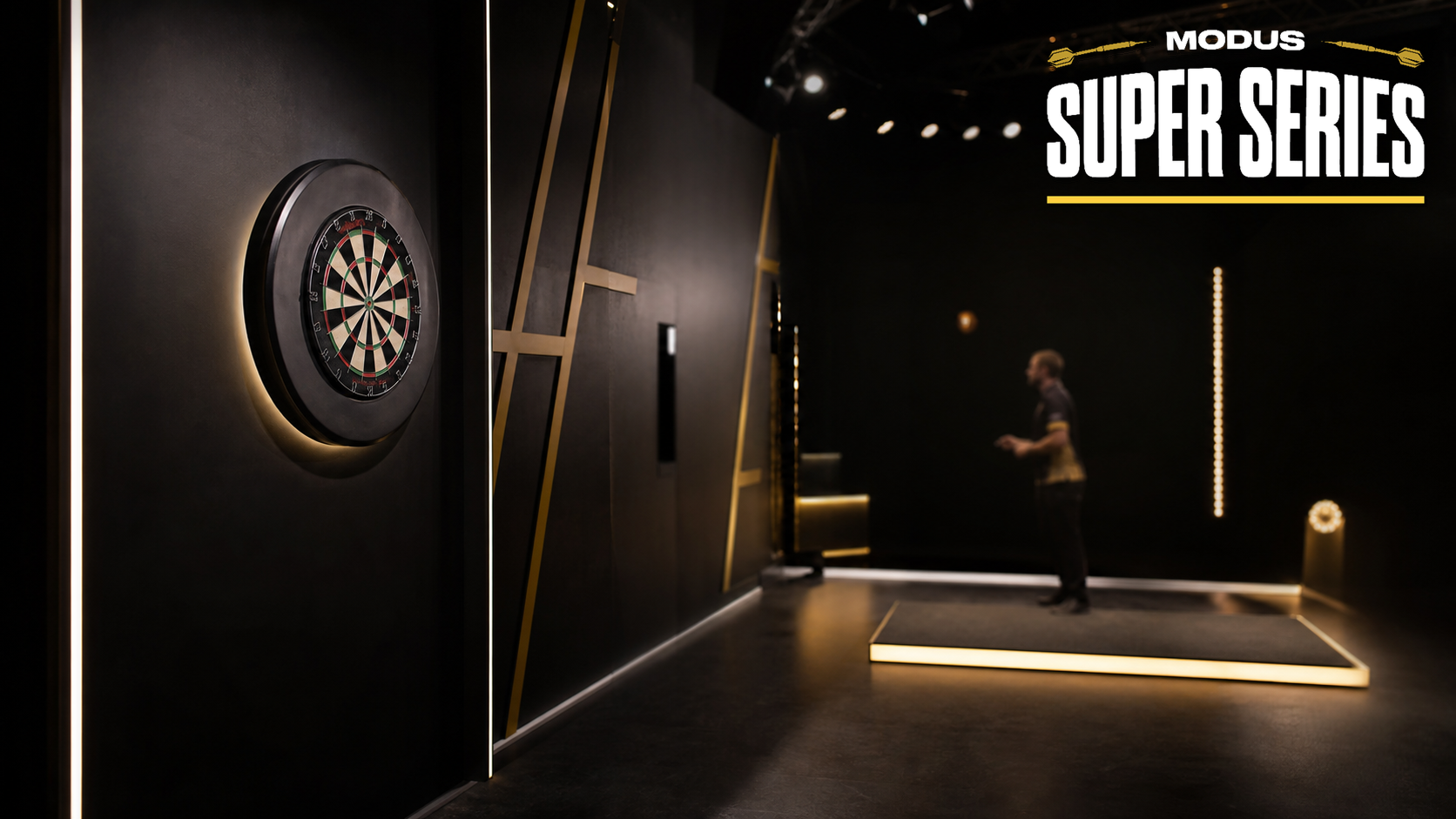
Alec Small won Week 8 of the MODUS Super Series by beating Sam Spivey 4-3 in the final on Saturday 20 June. In doing so, the Welshman pocketed the £5,000 prize and, more importantly, secured his place in Champions Week, the event that brings together the circuit’s weekly winners.
A perfect weekend format for producing useful news
This is exactly the sort of story we can cover effectively on Darts Nerd: there’s no need to follow every single match to produce something useful. At the end of the week, the key angle is simple: who won, against whom, how, and what difference it makes. In the MODUS Super Series, this model works well because the week culminates in a six-player final, with immediate stakes and a clear narrative for the reader.
In this particular case, Small went into the match full of confidence after dominating Group C during the Thursday and Friday sessions. He then held his own at the right moment, on a night when several players were still in with a chance of going all the way.
Alec Small’s run in the final
The final evening was by no means a walk in the park, however. In the group stage, Alec Small first suffered a defeat against Sam Spivey, before responding immediately with a 4-0 victory over Dylan Slevin. This response put him back on track and allowed him to reach the semi-finals without losing his momentum.
In the semi-final, Small then had to dig deep against Ryan Branley. The match was decided by the narrowest of margins, but the Welshman eventually edged out a 4-3 victory. This is often where this format becomes interesting from an editorial perspective: we don’t just have a winner of the week, we have a player who had to survive a truly high-pressure evening, with tight matches and the need to read the momentum shifts instantly.
The final followed the same pattern. Facing Sam Spivey for a second time, Small took his revenge and won once again by a score of 4–3. This ability to turn the tables on an opponent he had beaten earlier in the same evening provides a very clear narrative: Small didn’t simply win; he dispelled the only shadow cast over his final.
The six qualifiers and the evening’s draw
Saturday’s line-up featured Ryan Branley, winner of Group A earlier in the week, alongside the qualifiers from Groups B and C: Alec Small, Oliver King, Dylan Slevin, Graham Hall and Sam Spivey. Here too, the structure is straightforward for a results article: you can list the qualifiers, highlight the matches that really mattered, and then immediately focus on the winner.
Key results of the evening:
| Round | Match-up | Score |
|---|---|---|
| Group stage | Alec Small vs Dylan Slevin | 4–0 |
| Semi-final | Alec Small v Ryan Branley | 4–3 |
| Final | Alec Small vs Sam Spivey | 4–3 |
A full breakdown of all the matches isn’t essential for a short article. However, the reader must quickly grasp that Small fought his way to this title on a packed evening, with the tension building naturally right up to the final.
Why this victory matters for the future
The immediate reward is, of course, qualification for Champions Week, the event that pits the weekly winners against one another. But this sort of victory also has another value: it demonstrates a player’s ability to deliver several standout performances in a single run. On MODUS, it’s not just a question of raw ability. You have to cope with the build-up of matches, manage changes in pace and keep your composure when the evening gets tight.
For us, it’s above all a good editorial test: a clear winner, a close final, a clear-cut stakes and a format popular enough in the UK to warrant regular coverage. We can also link this type of story to a broader narrative, as we’d already done in our look back at Jeff Smith’s historic victory.
The right Darts Nerd format for MODUS
If we want to keep up with this competition without spreading ourselves too thin, the right model remains clear: a hub to host the articles, a weekend recap once the winner is known, and then separate features only when a performance, a big name or a storyline really stands out. Alec Small’s success fits this mould perfectly: substantial enough to warrant an article, yet concise enough to avoid over-coverage.
The circuit then gets back underway the following Monday with the start of Week 9, when new indicators of form can quickly emerge. It’s this rhythm that we need to pick up on: not every match, but the moments when the week finally tells us something.